The dances, one by one
Polynesian dances at a luau, explained
Hula, the Tahitian ʻōteʻa, the Tongan lakalaka, haka, poi and Samoan siva: what each dance is, where it comes from and how to watch it at a luau.
Save your seat at the luau ↗Quick answer
A luau show is a sampler of Polynesian dance traditions. Hula is Hawaiian and tells a song with the hands. The ʻōteʻa is Tahitian, fast and drum-led. The lakalaka is Tongan and nearly still. Haka and poi are Māori, and the siva, the sasa and the slap dance are Samoan. The Orlando show names Hawaii, Tahiti, Tonga, New Zealand and Samoa and ends with a Samoan fire knife finale.
One word, many islands
Polynesia is a subregion of Oceania made up of more than 1,000 islands scattered over the central and southern Pacific Ocean. Its peoples share linguistic relations, cultural practices and traditional beliefs, but they do not share one dance. Hawaii, Tahiti, Tonga, New Zealand and Samoa all lie within it. Each has its own dances, and the Orlando show names all five, though none of the five stands for the whole of Polynesia. This guide explains each tradition on its own terms, so that you can tell them apart when they follow one another on stage. The dances on your date are the organiser's choice, and no guide can promise a given piece.
Hula, from Hawaiʻi
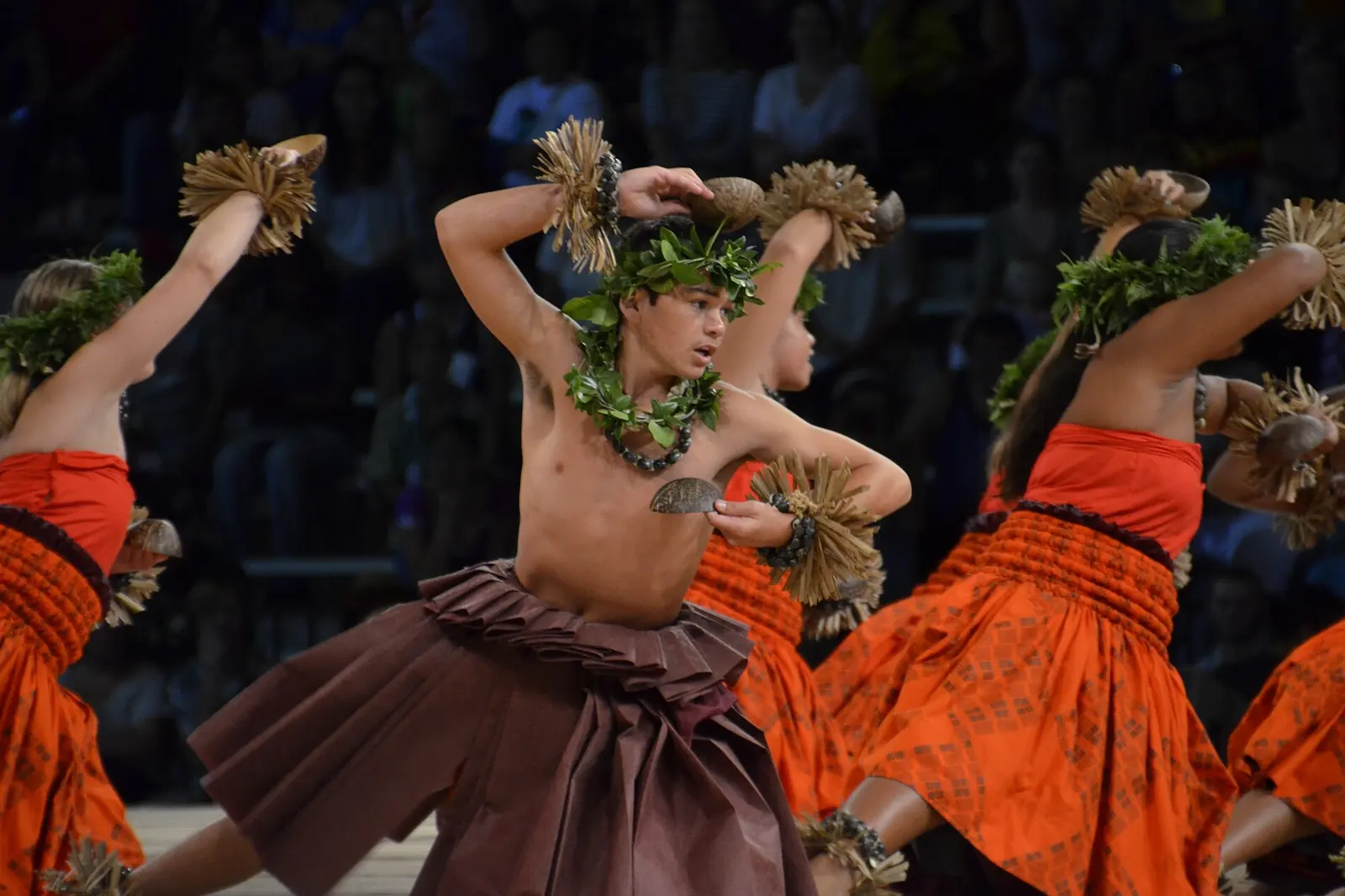
Hula is a Hawaiian dance form that expresses a song, or mele. It was developed in the Hawaiian Islands by the Native Hawaiians who settled there, and the dancer portrays the words of the mele in a visual form. The two main categories are hula kahiko, the ancient style performed before Western encounters and accompanied by chant and traditional instruments, and hula ʻauana, which evolved under Western influence and is accompanied by song and instruments such as the guitar, the ʻukulele and the double bass. Hand movements carry the story: they can show a tree swaying in the breeze or a wave in the ocean. A hula can be danced sitting, in the noho style, or standing, in the luna style, and some dances use both.
The ʻōteʻa, from Tahiti
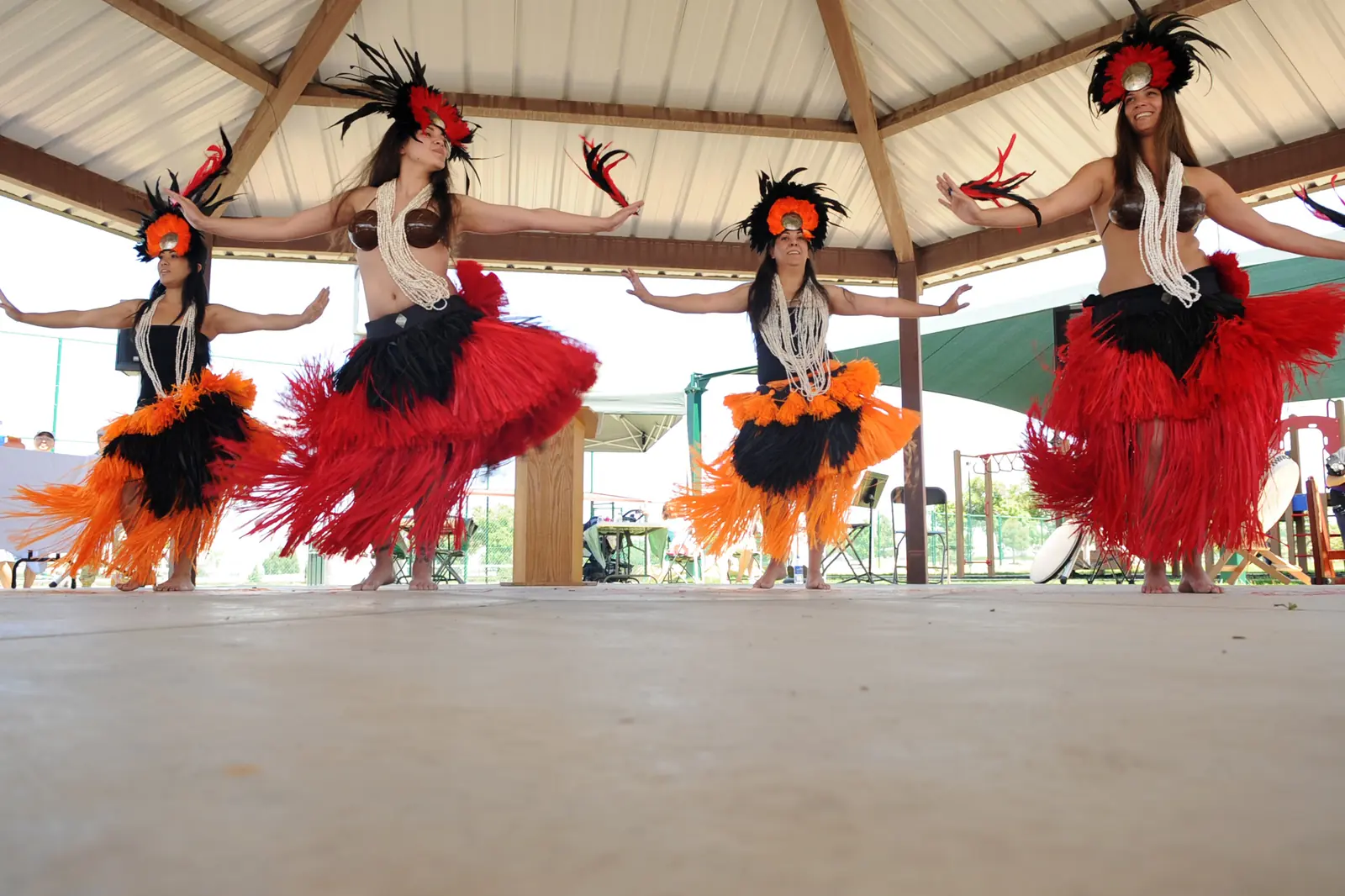
The ʻōteʻa is a traditional dance from Tahiti, where the dancers stand in several rows and execute figures. It is easy to recognise by its fast hip shaking and grass skirts, and it is often confused with hula, which is generally slower and puts the hands and storytelling ahead of the hips. The ʻōteʻa is one of the few Tahitian men's dances that existed before European contact. It can now be danced by men, by women or by both, and it is accompanied by instruments, especially drums, without singing. The gestures re-enact everyday occupations: for men the themes can include warfare or sailing, while for women they are closer to home or nature, such as combing the hair or the flight of a butterfly. The drum can be the tōʻere, a wooden log with a slit that is struck with sticks, or the pahu, the old Tahitian standing drum.
The lakalaka, from Tonga
The lakalaka is a Tongan group dance in which the performers stand largely still and make gestures with their arms only. It is considered the national dance of Tonga and is part of the intangible human heritage. It is the ideal dance for formal occasions such as the king's birthday or the opening of a church. It is also a living dance: when a celebration is coming up, a poet writes lyrics for the occasion, music is chosen for the stanzas from a pool of typical tunes, and the movements are then choreographed. The women's steps are small and their arm movements fluid.
Haka, from New Zealand
Haka are ceremonial dances of Māori culture, performed as a group with vigorous movements, stamping of the feet and rhythmically shouted accompaniment. They are traditionally performed by both men and women for a variety of social functions, such as welcoming distinguished guests, acknowledging great achievements or marking a funeral. Haka are popularly linked to battle preparation, yet Māori scholars reject the view that they are usually war dances. A group performing a haka is called a kapa haka.
Poi, and fire poi
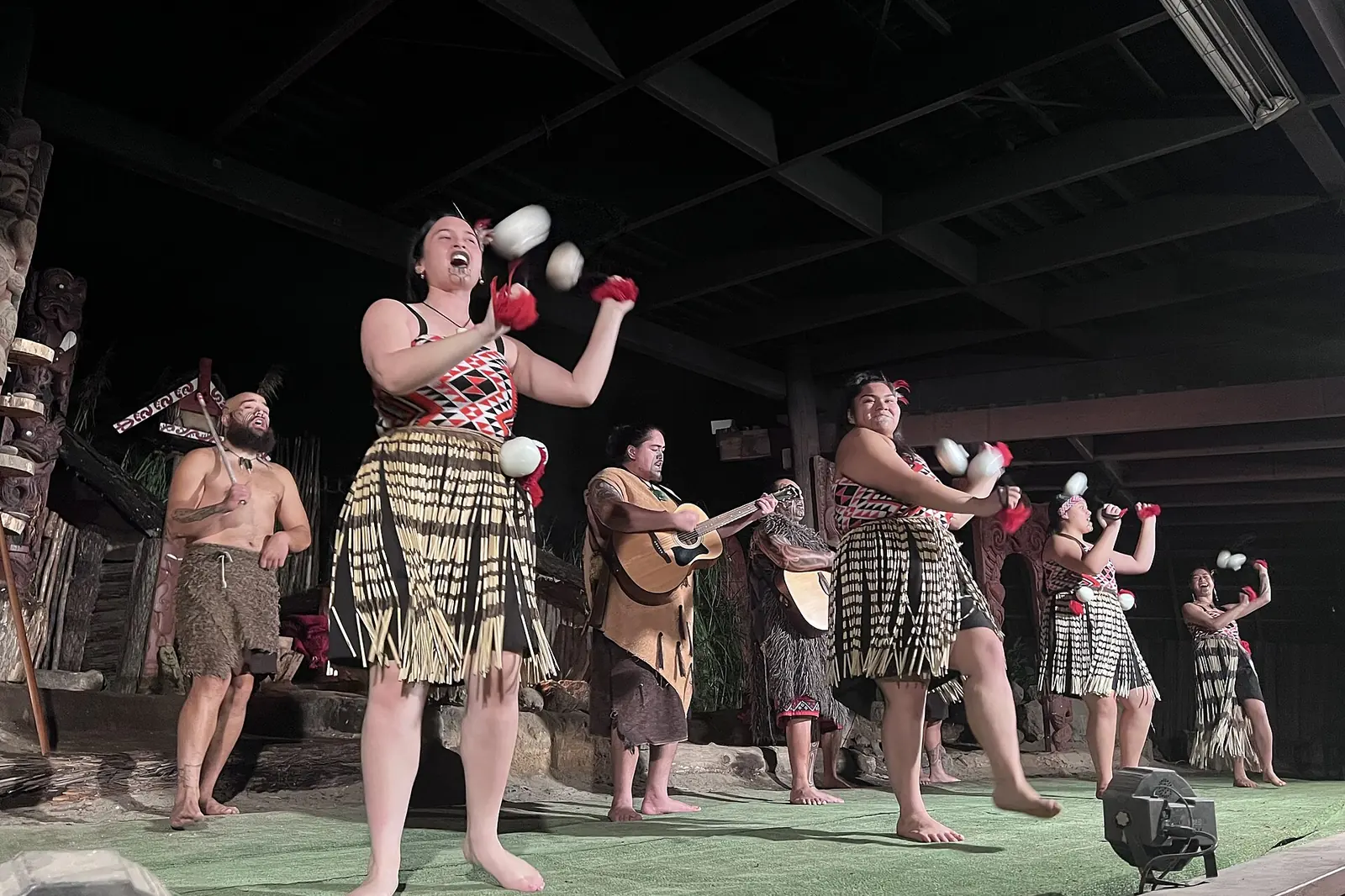
Poi began with the Māori people of New Zealand, where it is still practised today. In the Māori language poi can mean the physical objects the dancers use, the choreography itself, or the accompanying music, and poi performance is usually practised by women. Māori poi come in two forms: short, with strings the length from the fingertips to the wrist, and long, with strings the distance from the fingertips to the shoulder. As a performing art it involves swinging tethered weights through rhythmical and geometric patterns. Poi has since gained a following in other countries, and its equipment can be made with different effects, such as fire. The Orlando show lists fire poi among its items. Traditionally poi were made from harakeke, New Zealand flax, and raupō.
Siva, sasa and the slap dance, from Samoa
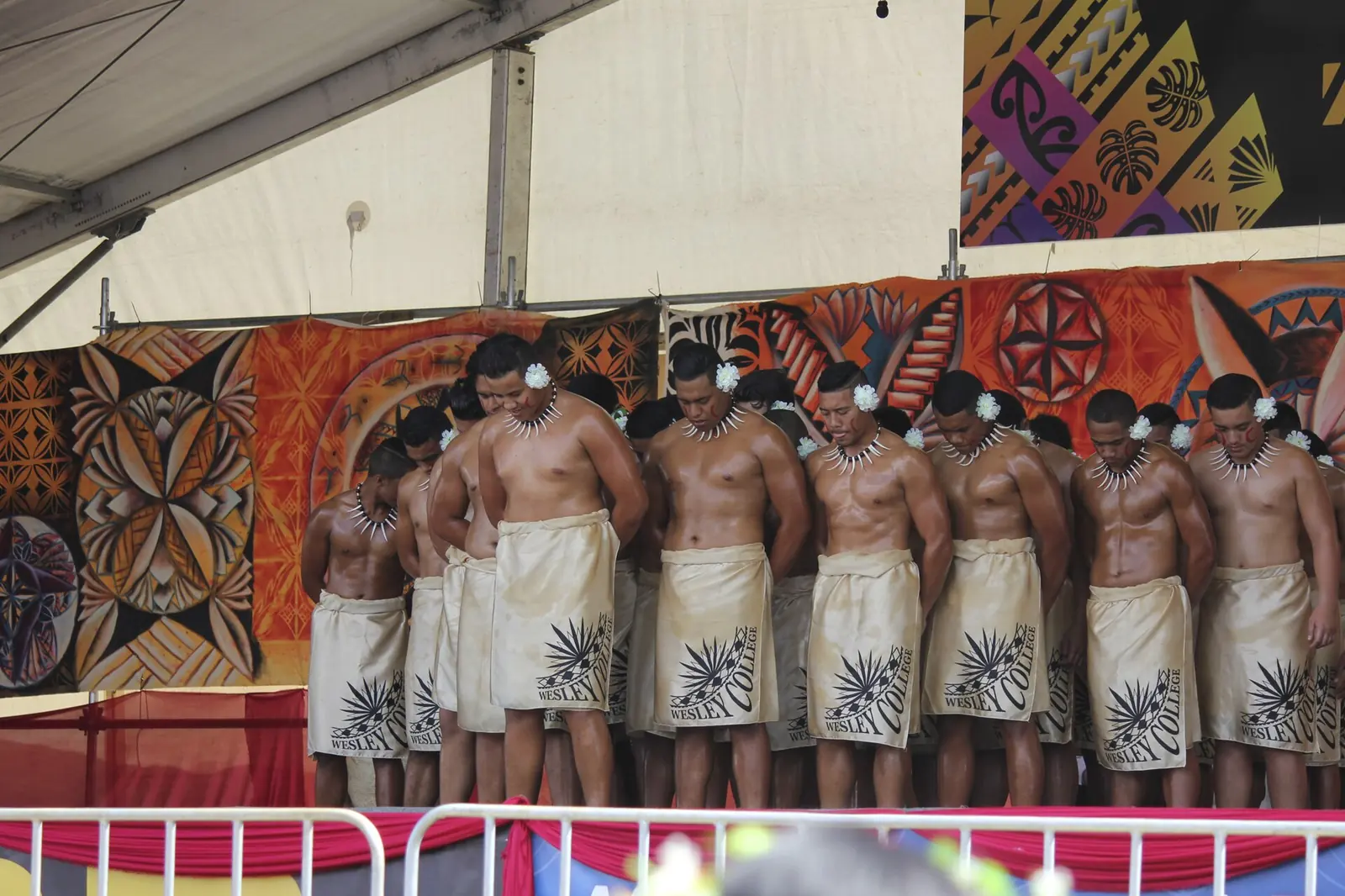
The siva is the traditional Samoan dance, and its women's form uses gentle movements of the hands and feet in time to the music. The sasa is a group dance performed sitting to a drum rhythm, and the maulu'ulu is a group dance performed by women only. The faʻataupati, called the Samoan slap dance in English, is traditionally performed by men, usually in a group and with no music accompaniment. The Orlando show is presented by a Samoan family from Nuʻuuli on Tutuila, so these are the traditions closest to its own home.
The taualuga, Samoa's closing dance
The taualuga is a traditional Samoan dance, considered the apex of Samoan performance art and the centrepiece of the culture. Its name refers to the last stage of building a traditional house, when the topmost rafter is secured, so it signals the completion of a great task. The dance is frequently the grand finale of an evening of entertainment. Traditionally it is performed by the son or daughter of a chief, and Samoans regard it as sacred. The Orlando evening closes with the fire knife instead; the taualuga is described here because it shows how a Samoan evening is meant to end. It is also frequently danced as the concluding number at Samoan wedding receptions.
The fire knife, the finale
The Samoan fire knife dance, called siva afi in Samoa, is where the Orlando evening ends. The first fire knives were machetes bound with towels at each end, the centre of the blade left bare. The towels are lit and the dancer twirls the knife through acrobatic stunts. The dance grew out of the ailao, in which a Samoan warrior showed his skill with a war club. The family behind the Orlando show comes from Nuʻuuli on Tutuila, and the operator describes the dances across the islands as building to the fire knife finale. The separate guide to fire knife dancing covers where the implement comes from.
Read next: Fire knife dancing and its Samoan roots
Four things to watch for
A few cues help you tell the traditions apart when they follow one another on stage. None of them is a rule, because the organiser arranges the evening and the dances can change from show to show, but each is a feature that the sources single out for its tradition. Keep them in mind as the show moves from one island to the next, and the differences should become easy to hear and see.
- Hands: in hula the hands carry the words of a song.
- Hips and drums: the Tahitian ʻōteʻa is fast and drum-led, with no singing.
- Stillness: in the Tongan lakalaka the feet barely move and the arms do the telling.
- Voices: haka are rhythmically shouted, and the Samoan slap dance needs no instrument.
- Flame: fire poi grows from the Māori art of poi, and the fire knife is a Samoan implement.
A note on respect, and who this isn't for
A dinner show condenses living traditions into a few minutes each, and the organiser decides what is shown. It is not a lesson, and it cannot stand in for seeing a dance in its own setting, such as the formal occasions where a lakalaka is danced. If you want the depth of any one tradition, start with the sources below. A seated dinner show can hold only a slice of each tradition. If you want a seated evening with dinner, music and fire, that is what the show is for.
Frequently asked questions
Is a luau Hawaiian or Samoan?
The word luau is Hawaiian and names a feast. The Orlando show is presented by a Samoan family, and it draws on dances from Hawaii, Tahiti, Tonga, New Zealand and Samoa.
What is the difference between hula and the ʻōteʻa?
Hula is generally slower and puts the hands and storytelling first. The Tahitian ʻōteʻa is fast, with quick hip shaking, and is danced to drums.
Are haka war dances?
Not in general. Haka serve many social functions, and Māori scholars reject the view that they are usually war dances.
What is fire poi?
Poi is the Māori art of swinging tethered weights in rhythmic patterns. In fire poi the equipment is made with fire as an effect.
What is the Samoan slap dance?
The faʻataupati is a Samoan dance traditionally performed by men, usually in a group and with no music accompaniment.
Will I see every dance in this guide?
No. The organiser chooses the dances, and they can change from show to show. The show features hula, warrior chants, fire poi and Samoan fire knife stunts.
Sources